How MARS increased a failing stone bridge’s capacity from 7 to 40 tonnes without rebuilding it
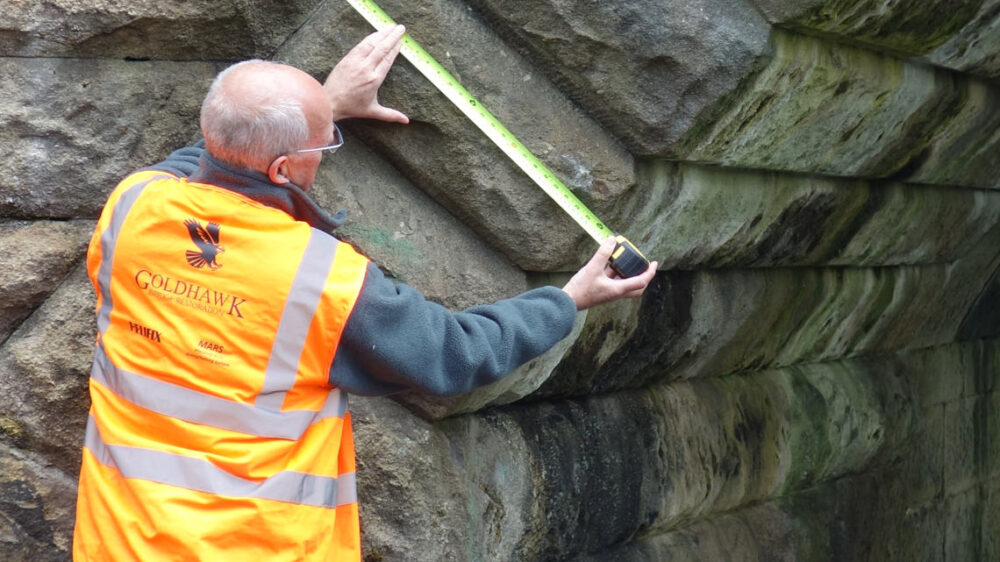
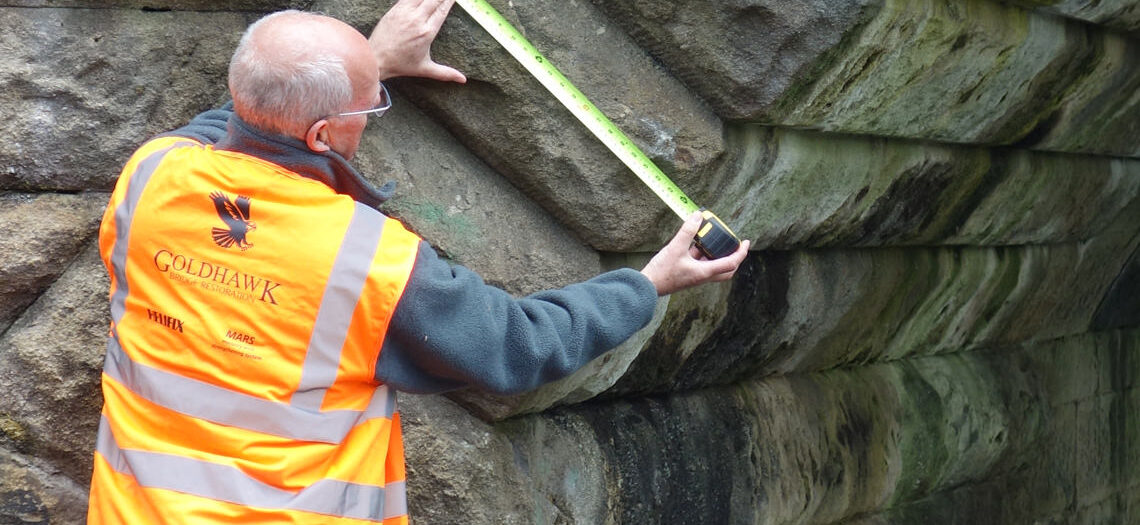
Client: Sheffield County Council Highways. Main Contractor: Amey LG Limited. Location: Stocksbridge, Sheffield. Completed: 2017
The problem: a vital river crossing restricted to 7 Tonnes
Unsliven Old Bridge carries Smithy Moor Lane across the Little Don River, just below Underbank Reservoir – the water source for Stocksbridge and its steelworks. A local authority assessment restricted the bridge to a 7-tonne weight limit, spanning the river well above normal water level. The council faced two options: decommission the bridge or demolish and replace it with a new concrete structure.
Why the bridge had weakened
Much of the bridge’s lost capacity traced back to a previous electric cable installation. The stone arch had been cut into from above and channelled out to give the cable the necessary cover, weakening the arch barrel and compromising its load-bearing capacity.
Local pressure to preserve the historic bridge
Community opposition to demolition brought the project to Stress Goldhawk Division, who re-assessed the structure and proposed the MARS System as an alternative – strengthening the bridge to a full 40-tonne capacity rather than replacing it.
Access challenges: Pontoon and scaffolding over the river
Working height above the river required a crane-lowered access pontoon, assembled directly in the water, with a scaffolding staircase built to connect the road-level riverbank to the pontoon safely. Scaffolding towers were then erected on the pontoon itself to reach the underside of the arch at height.
The MARS system solution
The MARS System strengthened the arch from beneath, offering Sheffield County Council Highways a cost-effective, low-carbon alternative to
a full concrete rebuild.
Repairing the cable damage from above
Because the electric cable installation had also damaged the arch from above, additional work was needed at road level:
- The road surface was removed and fill carefully excavated to expose the top of the arch barrel
- Minor repairs and grouting were carried out from above
- The fill was replaced with ‘no-fines’ weak concrete to restore depth without adding excess load
- Tarmac was reinstated and the road reopened to all traffic.
The result
- Weight limit increased from 7 tonnes to 40 tonnes full highway loading restored
- Bridge replacement avoided, saving significant cost and carbon compared to a new concrete structure
- Minimal disruption to drivers and road users during the works
- Delivered on time and on budget for Sheffield County Council Highways and main contractor Amey LG Limited.
A pontoon was crane-lowered from road level into the Little Don River and assembled on site with a scaffolding staircase built for safe access. Scaffolding towers were erected on the pontoon to reach the arch at height.
The bridge was restricted to 7 tonnes following a local authority structural assessment. STRESS Bridge Division used the MARS System to bring the bridge up to full 40-tonne highway capacity.
A previous electric cable installation required cutting into and channelling out the stone arch from above to give the cable adequate cover, which weakened the arch barrel over time.


Assessing the damage to the bridge
Exposed ducting and cabling installed in the 80s, causing damage and weakening of the bridge.
Stress Bridge Division team
The 8.5m span was originally built in 1730s as a narrow stone bridge for horses and pedestrians only. It was extended on both sides in 1796 to enable it to also carry carts.
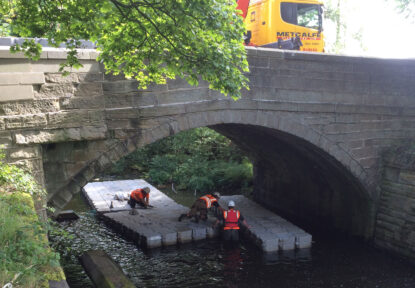
Working directly beneath the bridge
Our pontoon provided a stable, safe and mobile working platform directly beneath the arch without disrupting traffic on the bridge and avoiding expensive scaffolding which can affect the riverbed ecology.
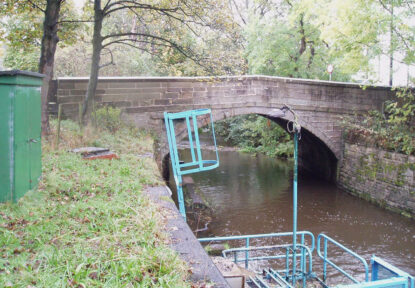
Keeping the riverbank safe with minimal distruption
Scaffolding stairs were built to allow safe access from the road level down to the pontoon.
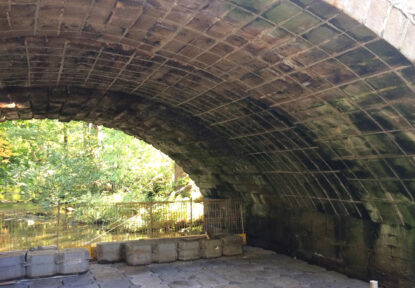
MARS system installation
MARS System was selected as a highly cost effective, close to carbon zero, conservation acceptable method of bridge strengthening whilst still preserving the heritage masonry.
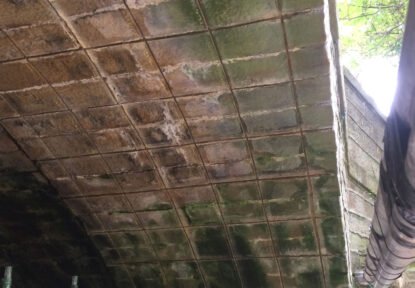
MARS System : concealed flush fit
Completely concealed subsurface installation leaves the bridge’s appearance and historical characteristics virtually unaltered.